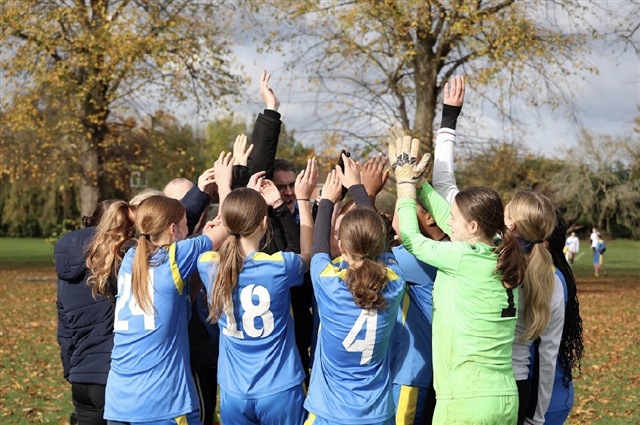



Coaching football has taught me many things - tactics, patience, leadership - but one of the most powerful lessons has been neurodiversity. When I first started coaching, I thought success was about drills, discipline, and match-day decisions. Now I understand it’s just as much about understanding how different minds work and building relationships. Neurodiversity in football means recognising that players think, learn, process information, and regulate emotions in different ways.
The first challenge I faced was communication. Football environments can be loud, fast, and full of abstract instructions like “press higher” or “be more switched on.” For some neurodivergent players, that kind of language is overwhelming or unclear. I realised I needed to be more precise. Instead of saying, “Mark tighter,” I might say, “Stand within an arm’s length of number 9.” Instead of delivering long team talks, I break information into short, concrete steps. Visual demonstrations have become one of my most powerful tools. Showing is often far more effective than telling.
Another challenge has been sensory overload. Training sessions can be chaotic - whistles blowing, parents shouting, multiple drills running at once. I’ve coached players who shut down completely in that environment. Rather than seeing it as a lack of resilience, I’ve learned to adapt the space. Sometimes that means providing a quiet reset area on the sidelines. Sometimes it’s as simple as warning a player before a whistle blows or giving them a clear schedule of what the session will include. Predictability reduces anxiety, and reduced anxiety unlocks performance.
Emotional regulation is another area where I’ve grown as a coach. Football is emotional by nature - mistakes happen in front of everyone. For players who feel things intensely, a small error can spiral into tears or anger. Being lucky enough to work with these players, I understand that regulation isn’t a switch you can flip. I build strategies: breathing routines before kick-off, clear roles so players know exactly what’s expected, and one-to-one check-ins after tough moments. I focus on effort and decision-making rather than just outcomes.
Perhaps the biggest shift has been in how I view strengths. Neurodivergent players often bring incredible assets to a team. I’ve coached players with laser-sharp pattern recognition who read the game two passes ahead. I’ve worked with young people whose hyperfocus turns technical practice into mastery. Others bring relentless energy and creativity that lifts the entire squad. When they realise that they don't have to “normalise” themselves, they instead build around their strengths and the whole team improves.
Of course, it isn’t always easy. It requires flexibility, humility, and constant learning. I’ve been able to educate myself, ask parents thoughtful questions, and sometimes admit when I’ve got it wrong. But the rewards far outweigh the effort.
Neurodiversity hasn’t made my coaching more complicated, it’s made it better. It has forced me to communicate clearly, structure sessions thoughtfully, and lead me to empathy. Most importantly, it reminded me that football is for everyone. When we adapt the game to fit different minds, we don’t lower standards, we raise them.