



When teams discuss attacking identity, much of the focus is on creativity and finishing. But the real artistry often begins much deeper. Build the attack is defined as a sustained possession in the defensive third of the pitch, and sets the tone for how a team creates control and draws the opposition out. Game Insights analyst Jess Saunders explores the latest trends in building the attack through a tactics and strategies lens.
There have been many different build strategies seen over the years, ranging from big switches of play to centre-backs taking goal kicks. Arguably, no strategy is more well-known than Pep Guardiola transforming Manchester City into a trophy-winning team, with the inverting of his fullbacks into midfield – John Stones was a well-oiled machine!
In the women's game, this looked slightly different, with Chelsea's signing of Keira Walsh being pivotal to their continued winning success, through her close connection with teammates in the back line. This enabled Chelsea to score the most goals from the build-up phase so far in the 25/26 season. These team connections are critical in the 'build the attack' phase, where more manipulation of space is needed to build through the thirds.
But what other new tactics and strategies are on the horizon that you should know about?
Case Study: Manchester City’s 25/26 Blueprint
This season, Pep Guardiola's side has shown adaptability in their build-up play, moving into a new era of in-possession rotations. Whilst still retaining control, they now build more directly, using wide rotations and quick progression through the thirds.
Instead of dominating possession traditionally, they are now more selective and more lethal with their build-up moments. Statistically, Manchester City spends just 15% of possessions in the build phase. Yet, when they do build, they are the most effective team in the league.
- 1st in the league for builds leading to a shot (10.7%)
- 1st in the league for builds leading to a goal (4.3%)
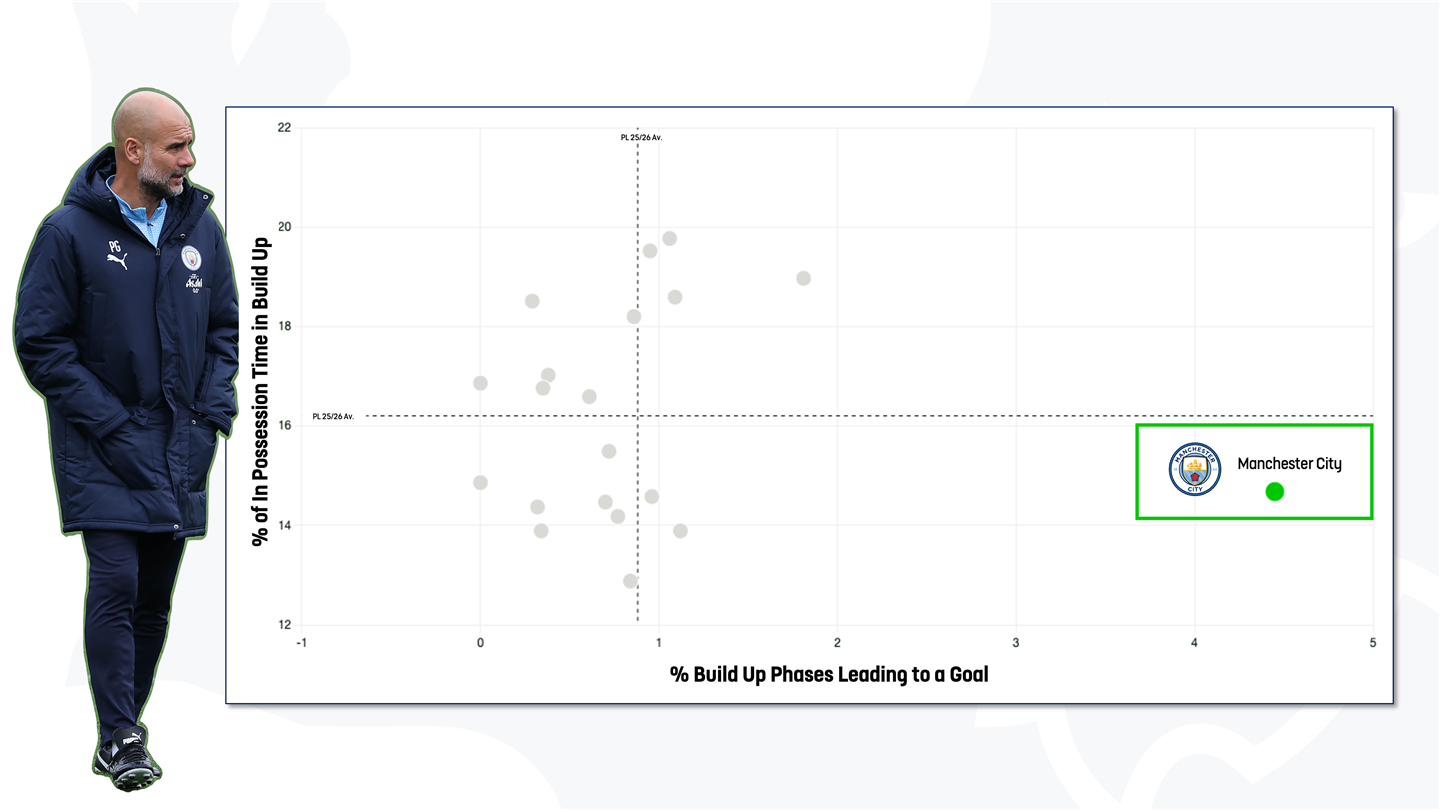
A graph to show % of build-up phases leading to a goal, and % of in-possession time spent in the build-up phase. It shows Manchester City as the standout team for % of build-up phases leading to a goal.
Their ability to create high-quality attacking outcomes from fewer build moments demonstrates that it is not always about how long you have the ball, but what you do with it. Two players, in particular, have thrived in this attacking game strategy so far this season – Jeremy Doku & Nico O'Reilly.
Left-back & left-winger connections
Doku and O'Reilly have exemplified the success of building a strong relationship between fullback and winger. In fact, Doku has played more passes to O'Reilly (36) than to any other teammate so far this season, with O'Reilly already returning the favour 55 times.
Individually, Doku has created more chances per 90 (3.28) than any other Manchester City player in the Premier League so far this season. O'Reilly has the 2nd-highest xG per 90 (0.94) of all left-backs in the league so far this season.
Together, they have been the driving force behind Manchester City's attacking play, moving the team from the defensive third to the attacking third. Manchester City's 3-0 win against Liverpool is a clear example of their connection. The graphic below illustrates Manchester City's structure when building the attack in this game.
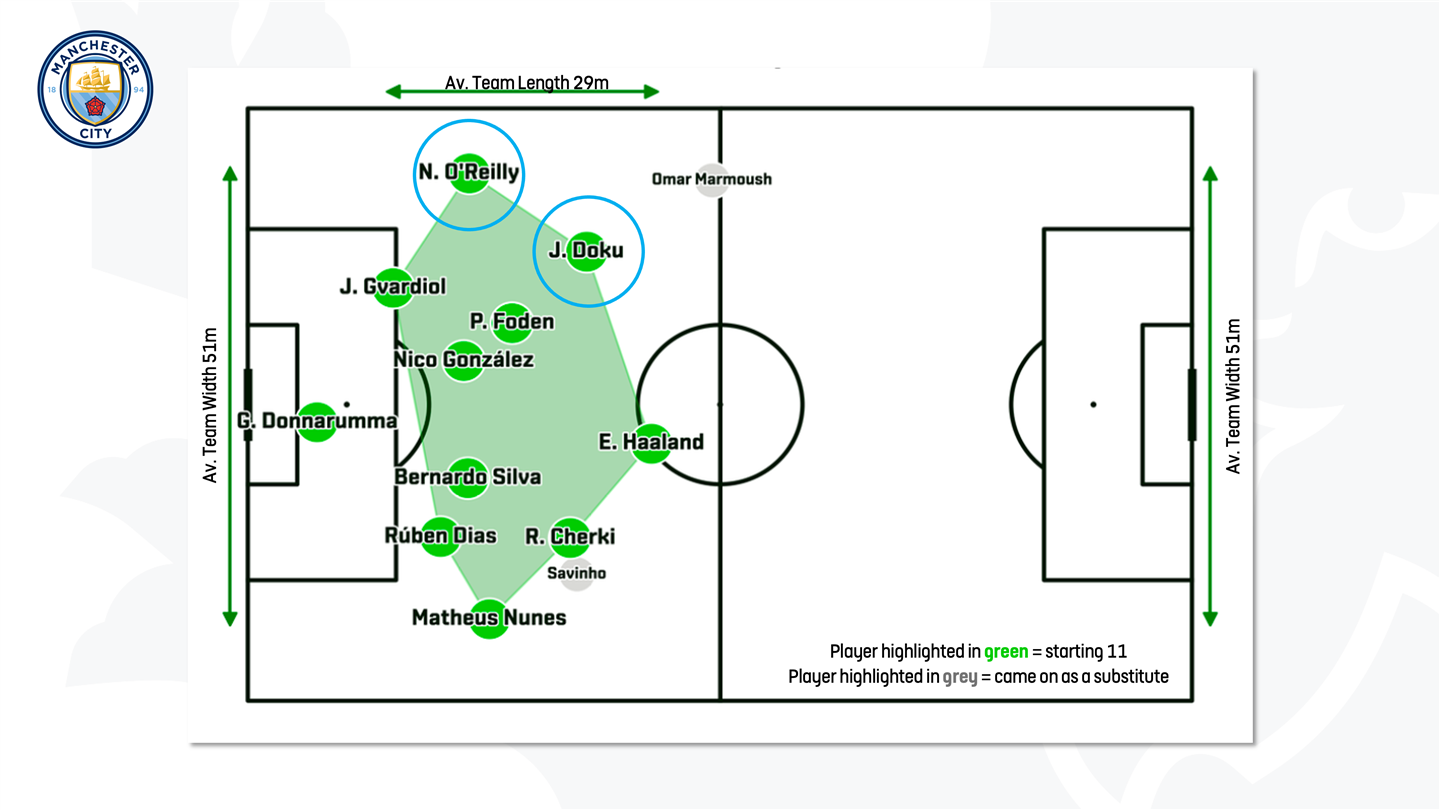
A graphic showing the average positions of each Manchester City player in their game against Liverpool, when in the ‘build the attack’ phase of play.
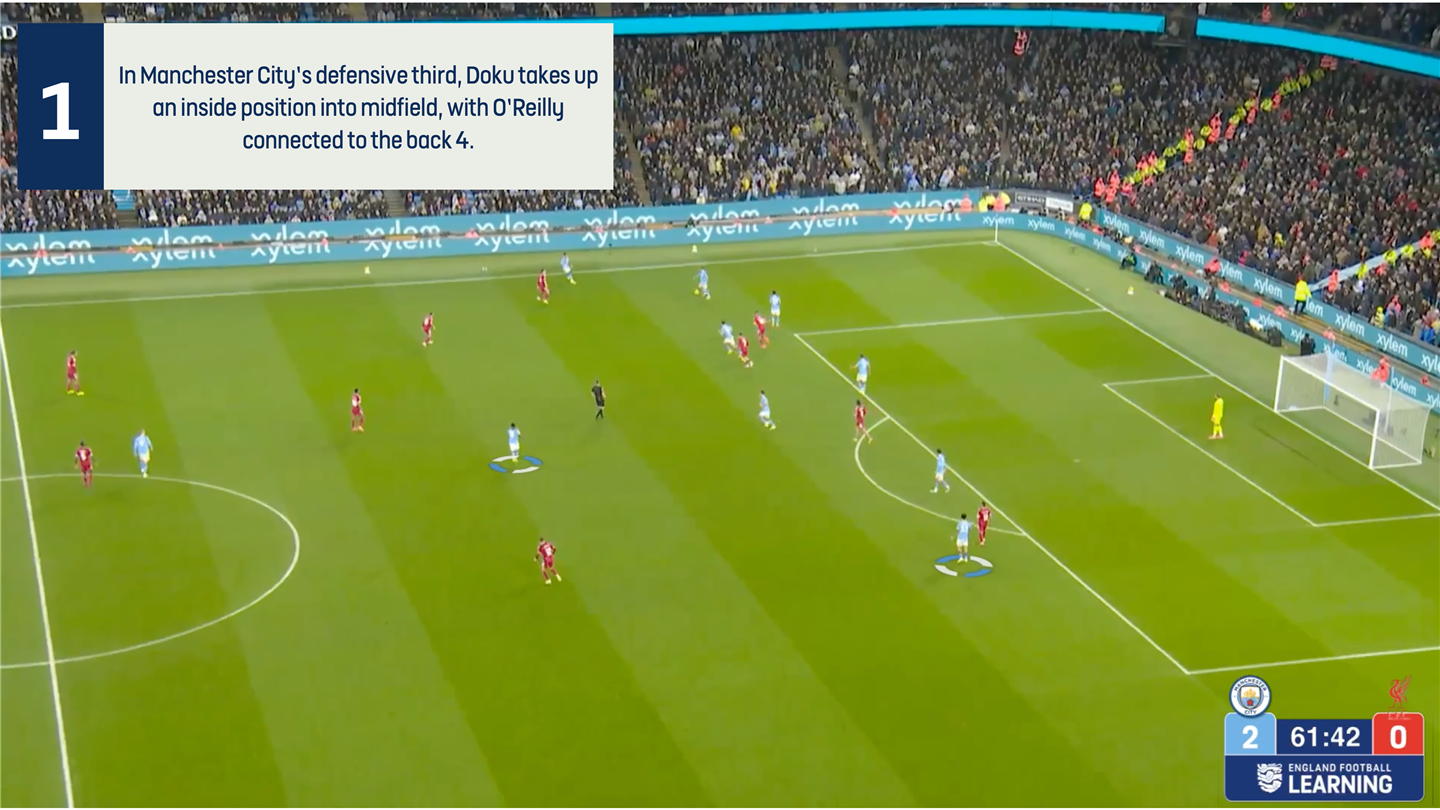
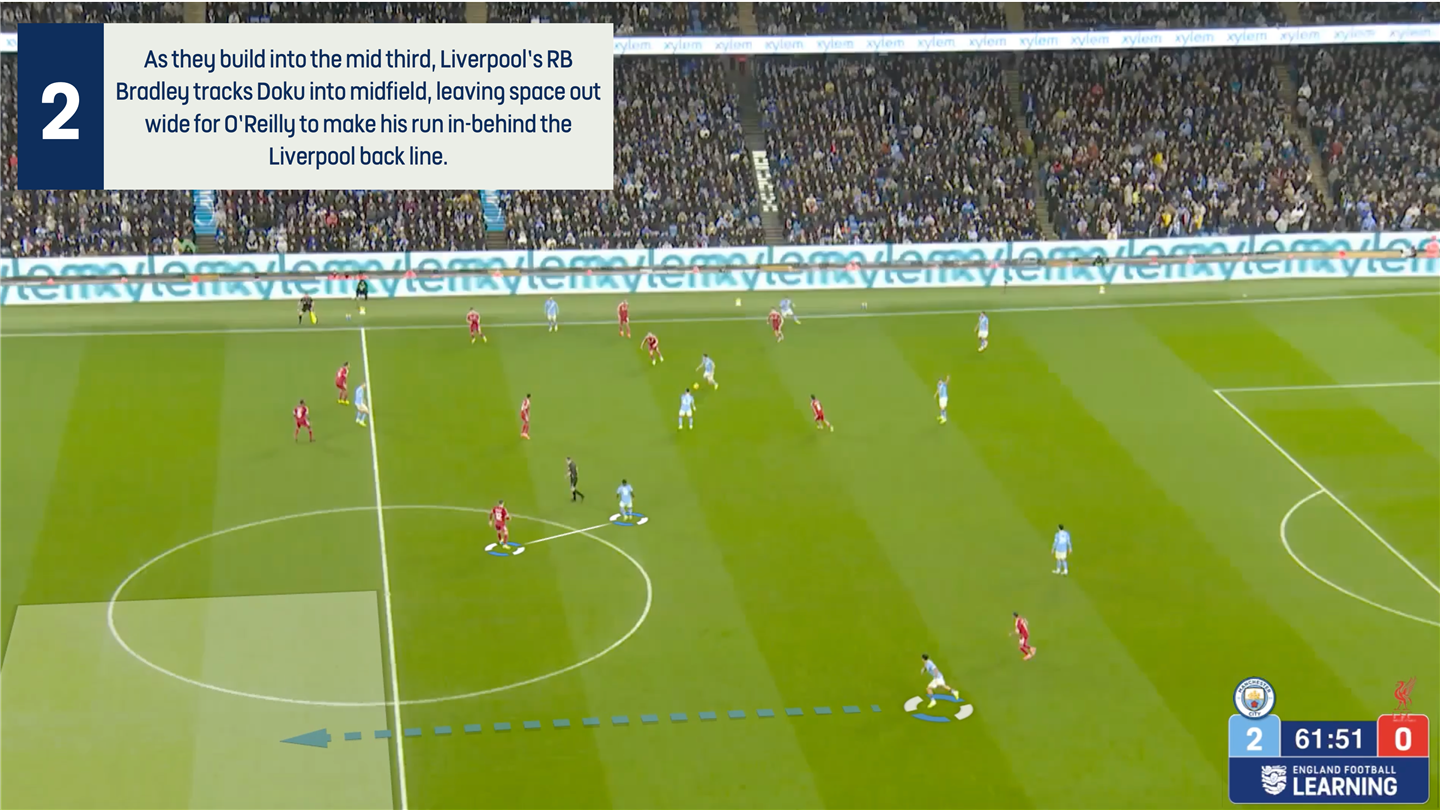
Doku was able to occupy an inside position, whilst O'Reilly stretched wide. This allowed them to play through the phases successfully, with 82% of all Manchester City builds against Liverpool progressing to either the create phase or the direct phase. This came with excellent success when Doku scored Manchester City's third goal of the game, as shown below.
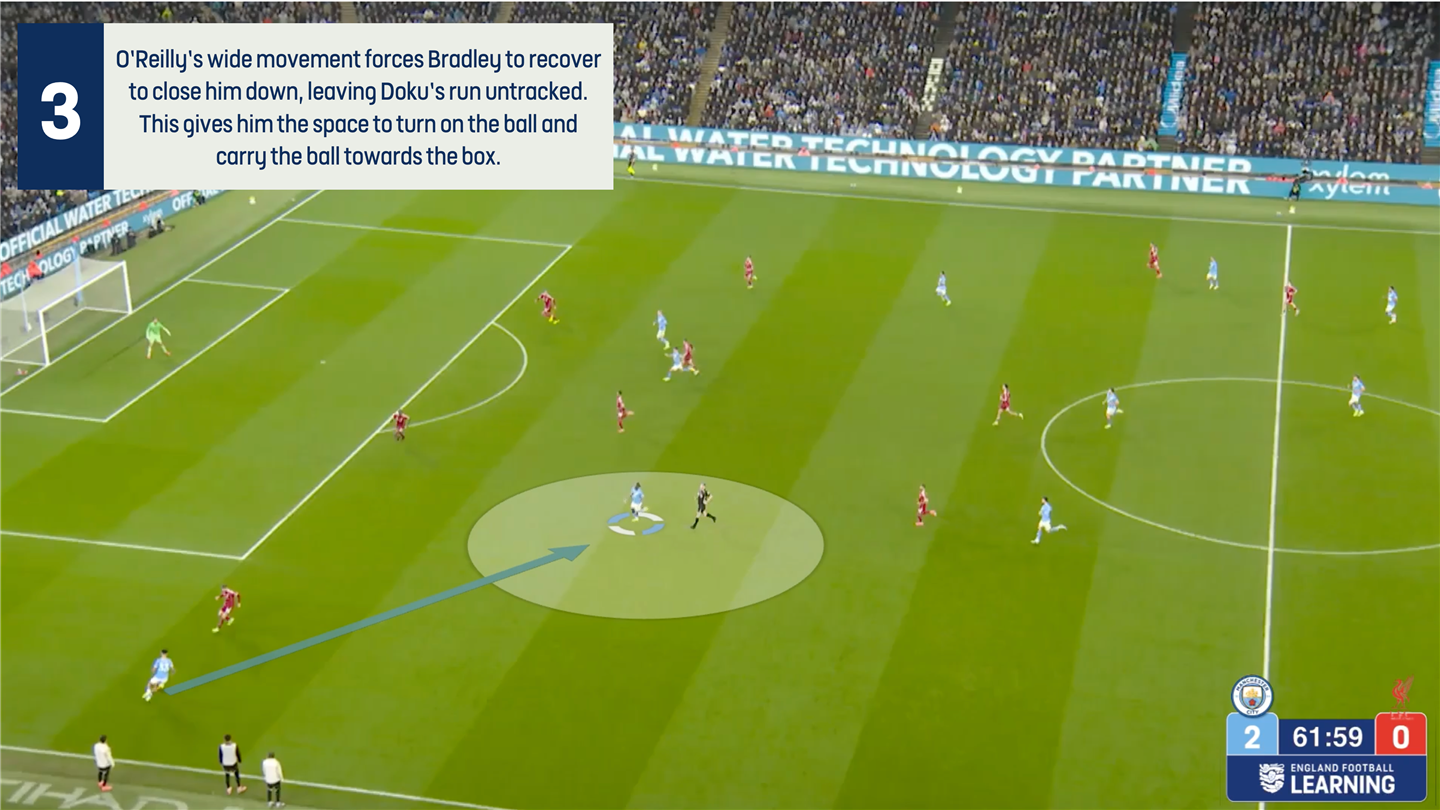
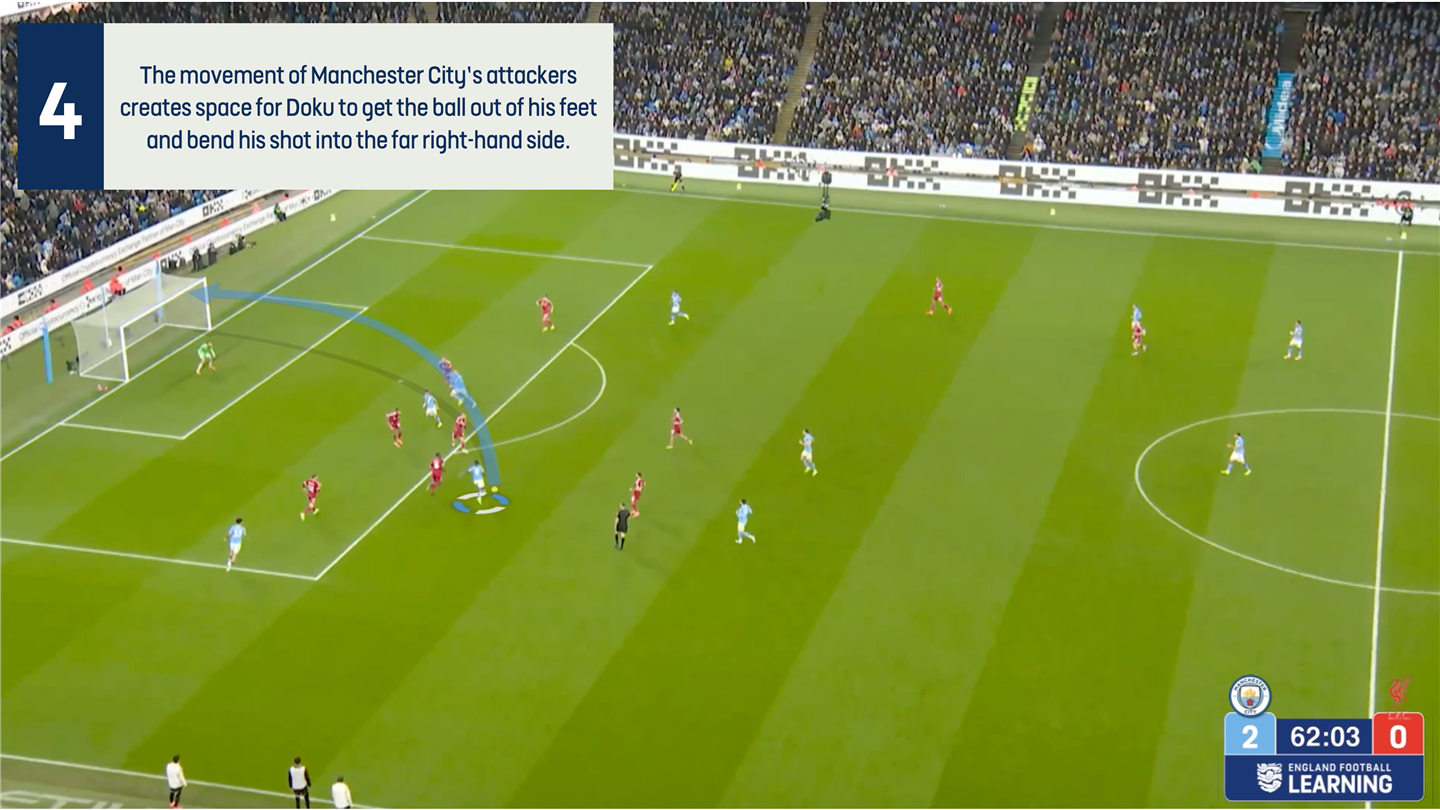
How do they utilise the six capabilities to achieve success?
Manchester City's use of Doku and O'Reilly provides a perfect illustration of the six capabilities, enabling City to move directly yet intelligently.
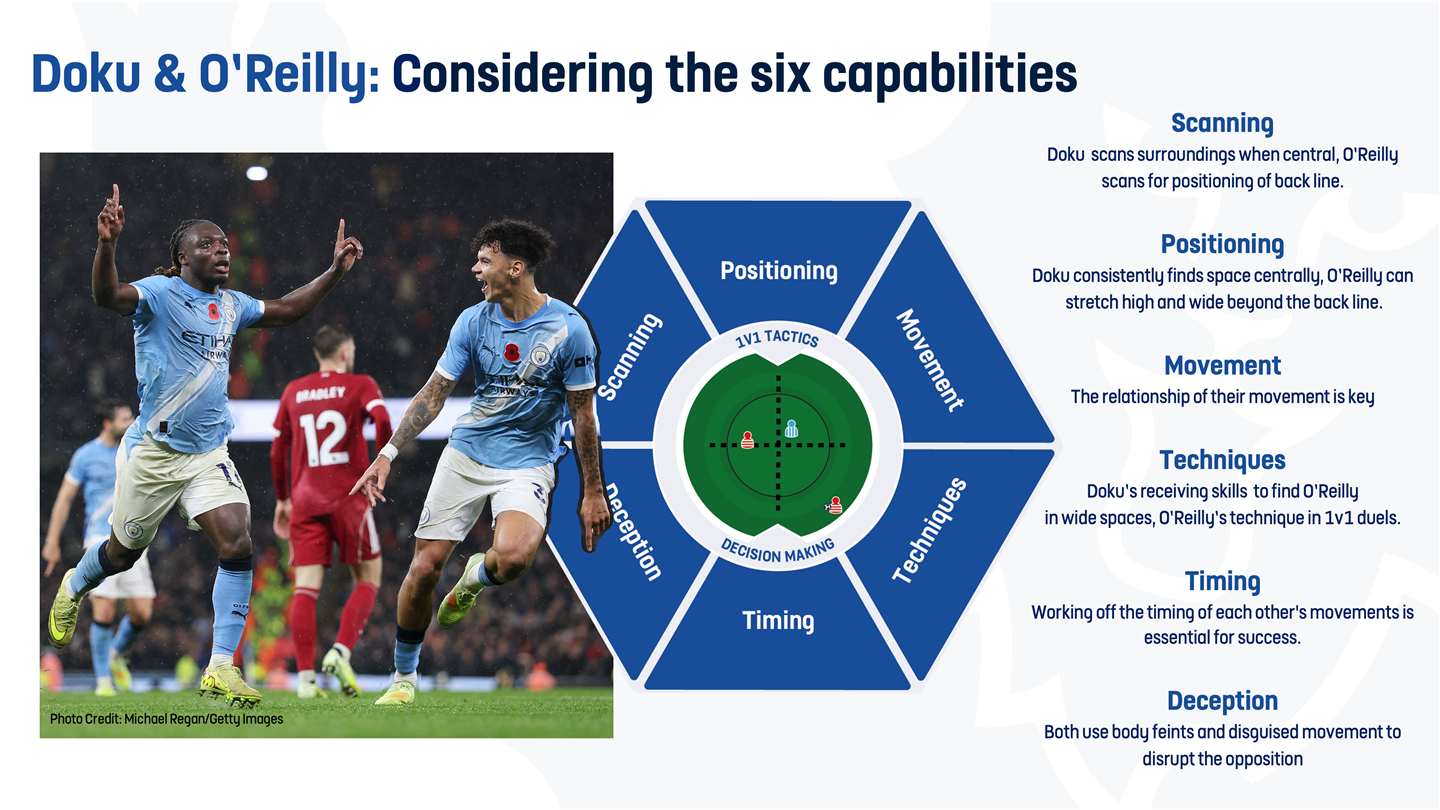
A breakdown of the 6 capabilities and how Doku and O’Reilly may use each capability in their in-possession actions.
What does this mean for you?
Now that we have explored a new example of a strategy to help you build the attack when faced with less possession, now it's your turn! Below is an example session plan that you can use to not only introduce your players to a new and trending build the attack strategy, but also to a session that improves those smaller team connections between positions within your team.
Caption: An example of a 'build the attack' practice
Coaching considerations:
- Are you rewarding purposeful progressions that encourage your players to recognise moments to play forward following a spell of possession?
- How do you use wide players in central areas to manipulate spaces when building through the phases?
- How often do your sessions encourage the strengthening of relationships within your team and their positions?
Want more? Click the link here to join our next webinar: Plan, coach and deploy a build the attack strategy