



Pressing, challenging, intercepting, covering, and marking. Your players need to use all the out of possession core skills. In this blog, Game Insights Analyst James Cook examines pressing and challenging. Delving into WSL and Premier League data, video and practice design considerations.
Pressing
Before it becomes a team strategy, there is an individual skill to master. Let's consider the six capabilities of the core skill pressing…
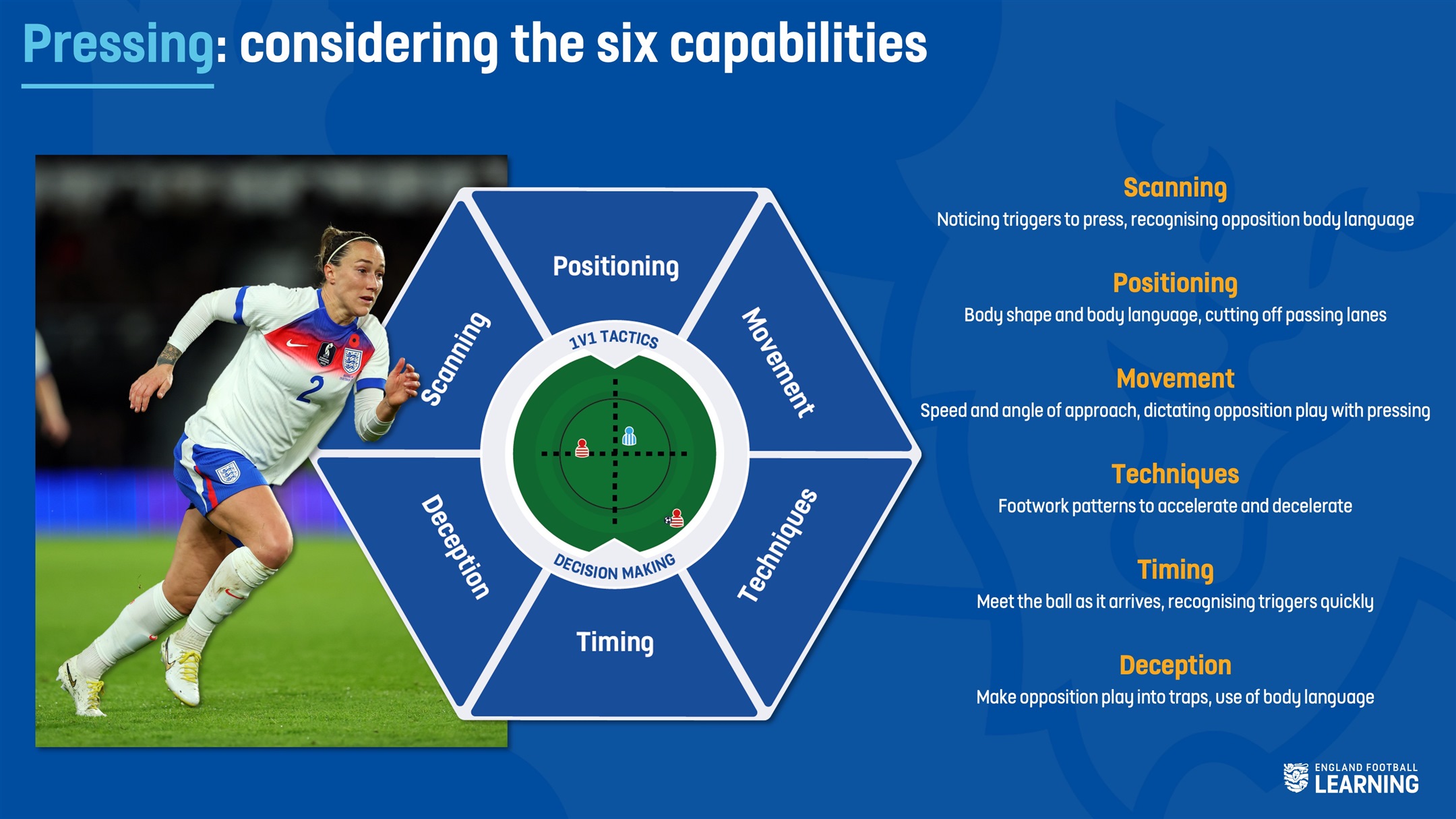
Consider the technical details you would deliver to your players while coaching pressing. Do you cover all 6 capabilities?
The 6 capabilities of pressing may look different depending on the in-game scenario. And, each position on the pitch will find themselves pressing in different scenarios. Sometimes, players will apply pressure as an individual or as part of a pressing chain. A pressing chain is where teammates work together to apply pressure to an opponent. It’s a coordinated attempt to win the ball back.
Check out the video below to see examples of these different types of presses in the Men’s FA Cup.
Let’s look at the position breakdown for individual pressures and pressing chains.
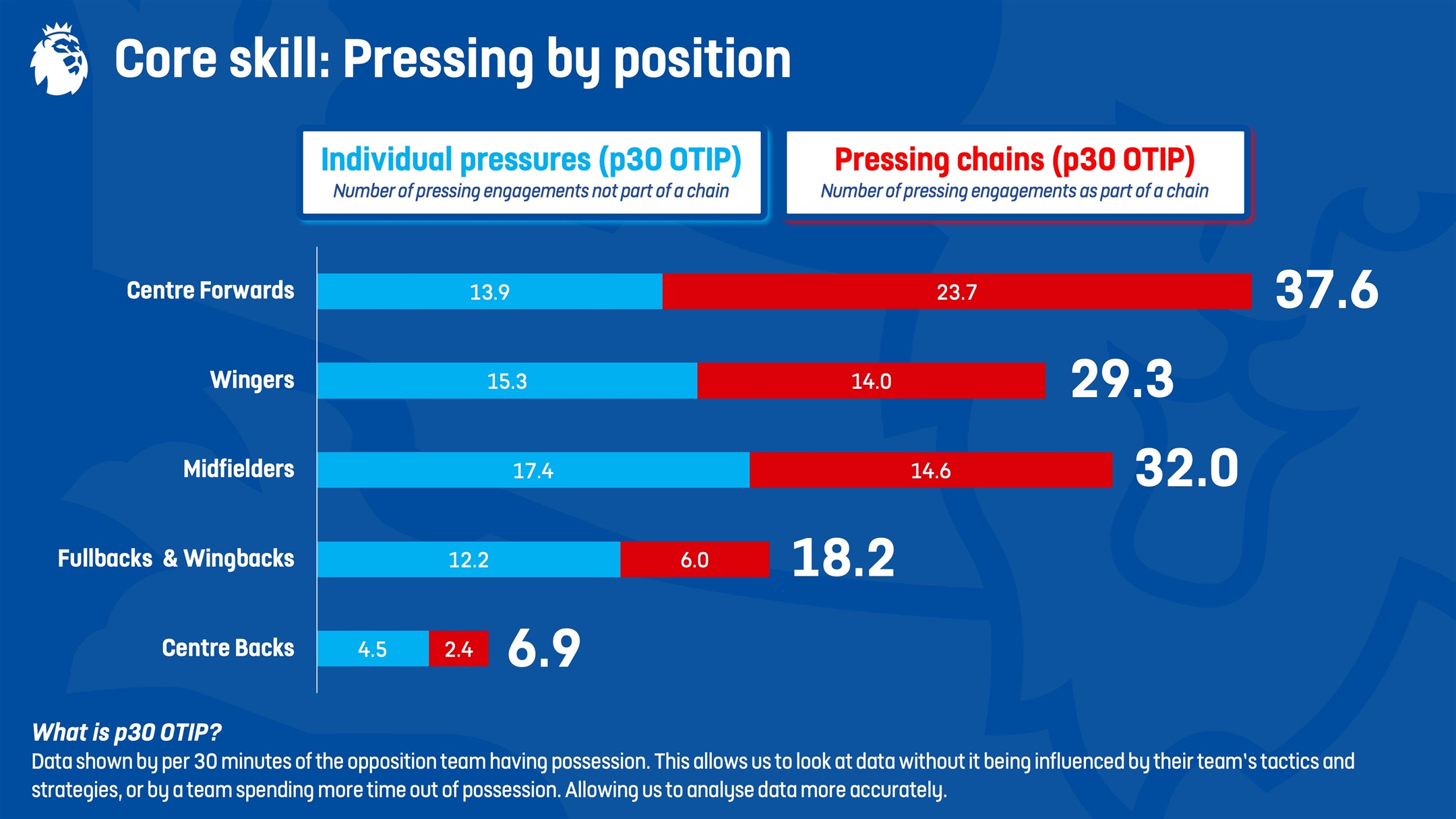
Centre forwards are in pressing chains the most, often initiating the press. So, how might they use the 6 capabilities?
Centre forwards will need to be scanning for opposition players to notice triggers. This may be the opposition's positioning or body language. A trigger to press might be a backwards pass or a bad touch. Strikers must be in the appropriate tactical positioning, with the correct body shape. This can allow them to force play into a trap or win the ball back themselves. Their movement, speed, and angle of their run are crucial to their press. As they approach the player with the ball, the technique of their stride length will need to be shorter to slow down. This enables the striker to change direction and even challenge themselves. Timing is essential to avoid vacating their position too early. But also not arriving too late and giving the opposition too much time on the ball. Having effective body language can create deception to force opposition play into traps.
The details of using these six capabilities may differ for other positions. For example, midfielders apply the most individual pressures, and have a high involvement in pressing chains.
Let’s see which midfielders stand out for this core skill.
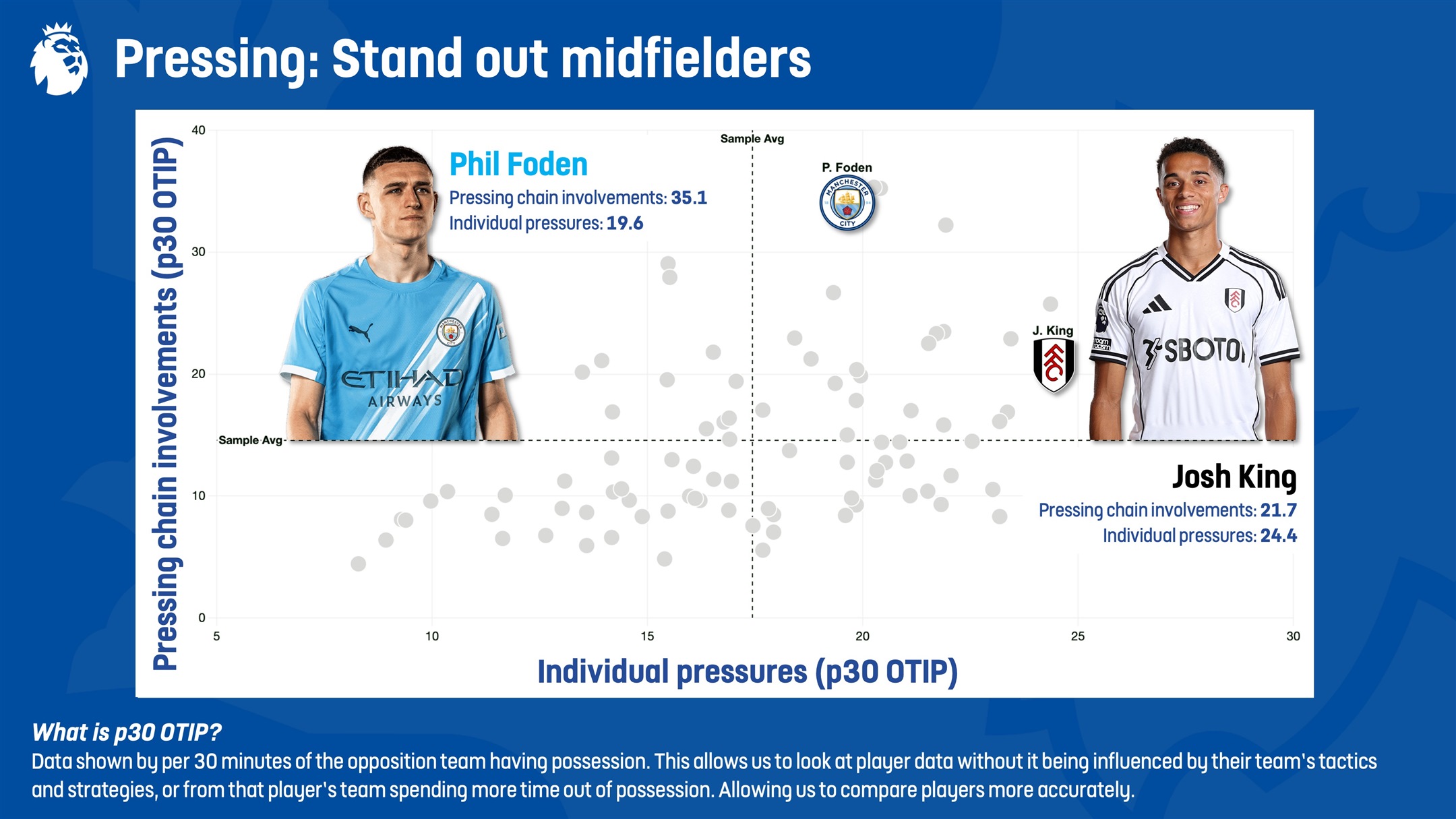
Here are two top midfielders in the Premier League this season who excel at pressing. Josh King and Phil Foden both have to press in a chain and as an individual. While King at Fulham does more individual pressing, Foden presses more in a chain. Consider the technical differences in these types of presses and how they relate to the six capabilities.
Challenging
Now, let’s consider the six capabilities of challenging…
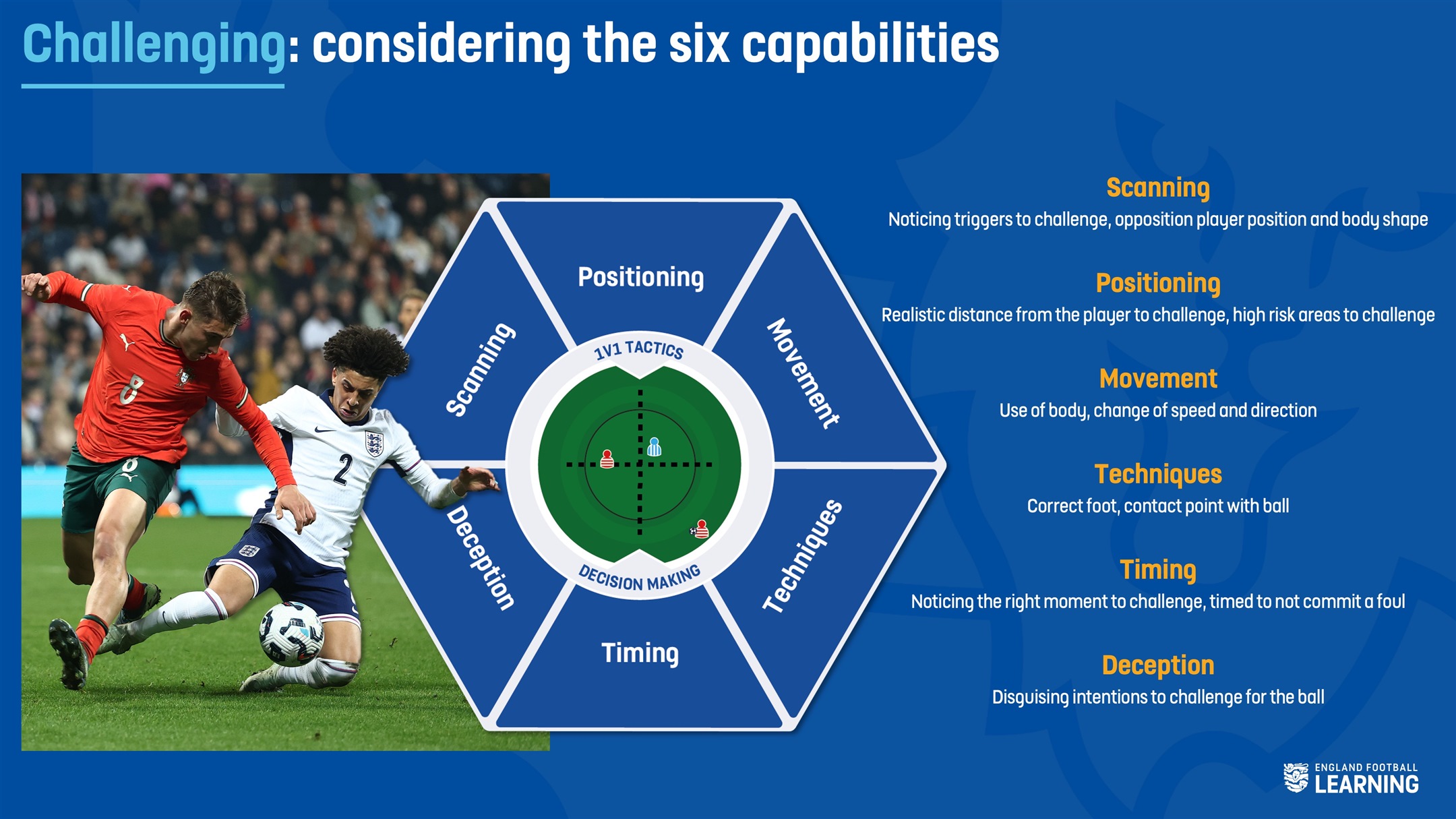
Challenging is a key part of the game. We've noticed differences in the Premier League and WSL.
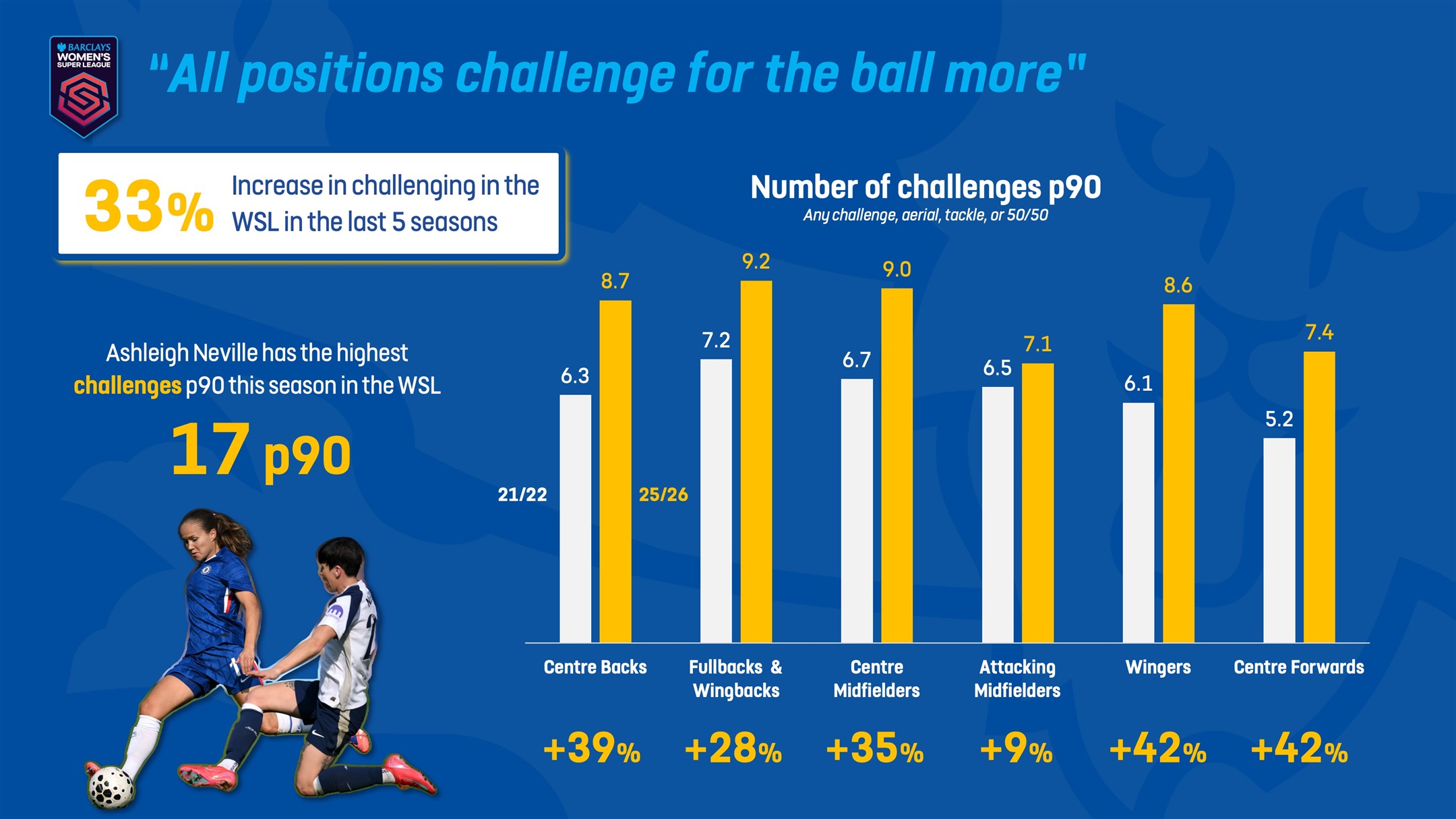
Premier League players make more challenges (9.7 p90) than WSL players (8.3 p90). But, the WSL has had a big increase in challenges over the last 5 seasons. Now, players are challenging for the ball 33% more. Players in the Premier League have only had a 4% increase. The breakdown above shows which positions have the most challenges, and which have had the biggest increase.
We can see that all players have to challenge during games. Our practice designs need to allow our players to practice this. We can do this through the three R’s.
Repetition – Do our players get enough opportunities in practices to challenge for the ball? Small-sided games in tight areas ensure that there are lots of actions within the practice.
Relevance – Are your practices age and stage appropriate for your players out of possession? Also, consider the ability of your players when designing practices. Consider matching up players of similar ability within a practice to give them the appropriate challenge.
Realism – Do our practices mimic real game scenarios that our players would challenge in? Consider the positions your players play and where on the pitch they challenge the most. For example, if your defenders make lots of challenges inside the box, focus on coaching the technique of a controlled challenge.
While players in each position will face varying scenarios where they can challenge, these scenarios can even look different for players in the same position on different teams.
Check out the video below as we focus on WSL fullbacks playing for Arsenal and Everton.
What did you notice when watching the clips? What are the scenarios where fullbacks on each team are making challenges? Was their use of the 6 capabilities different?
Here’s a visual of the two teams’ defensive actions by pitch location.
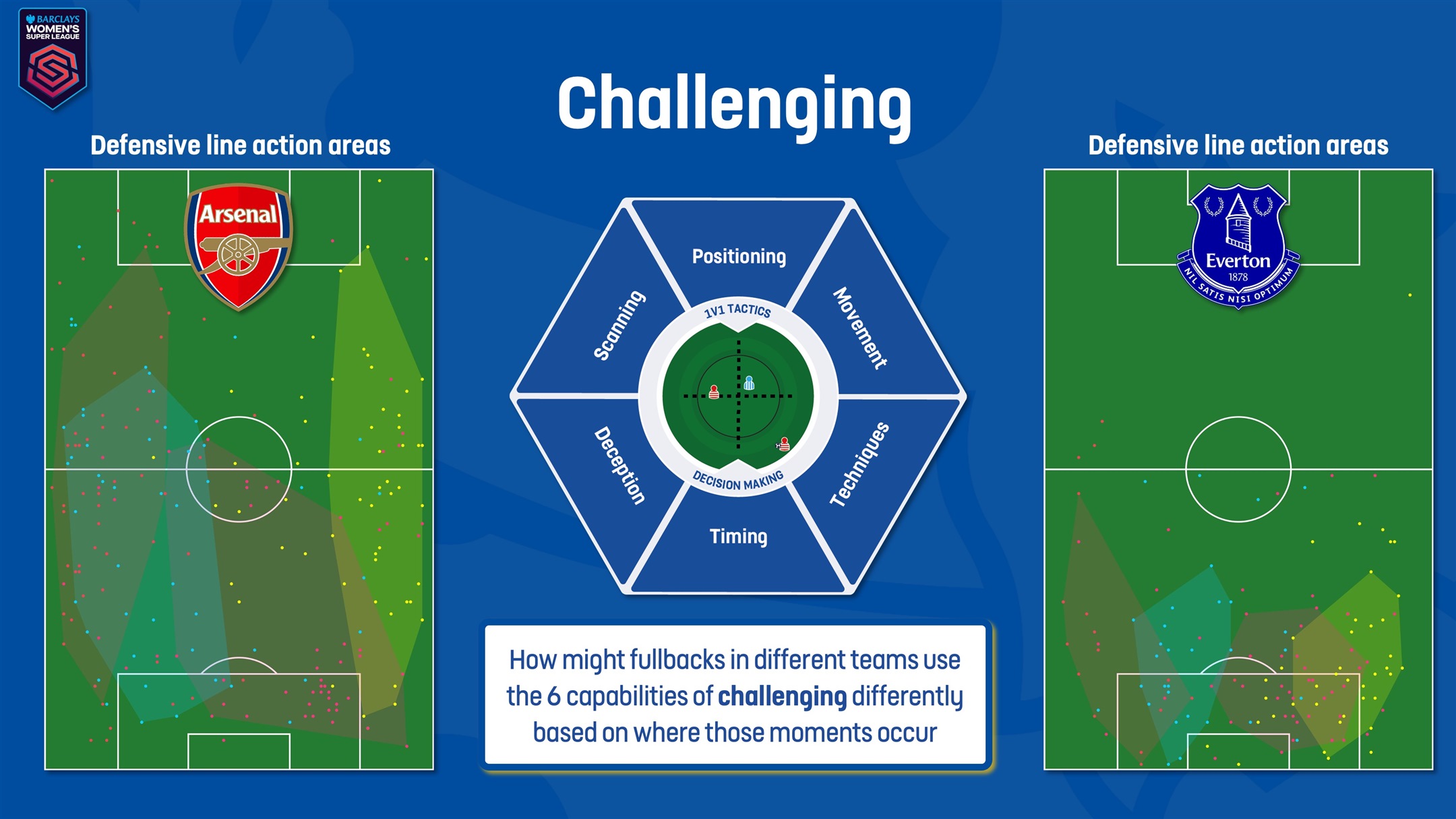
This will link into the teams' tactics and strategies. But, the scenarios look different for the player executing the core skill. Consider the players on your team and the scenarios they encounter to challenge for the ball. The key is to then design game-realistic practices which reflect those scenarios.
Check out the examples below.
Practice design
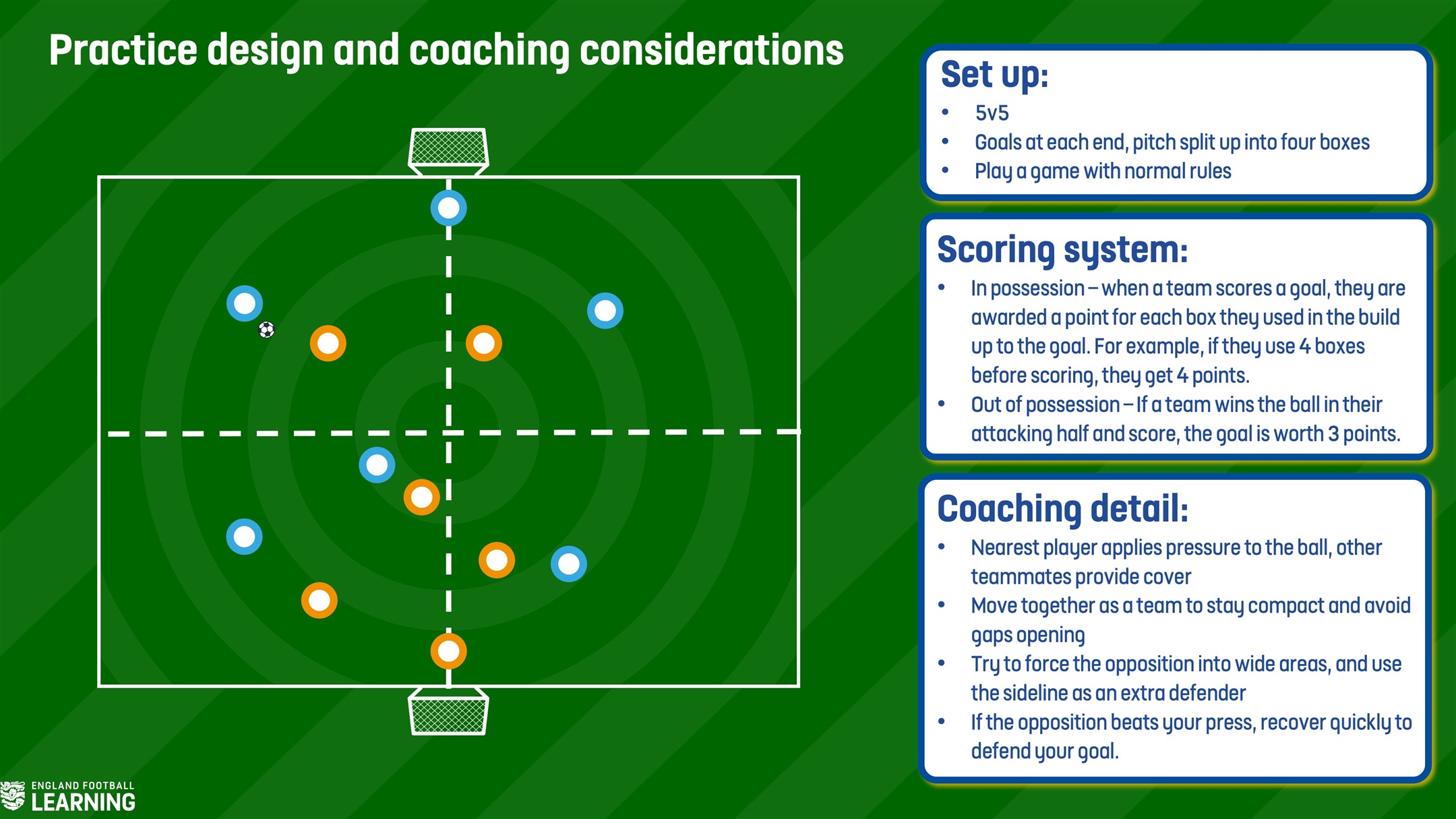
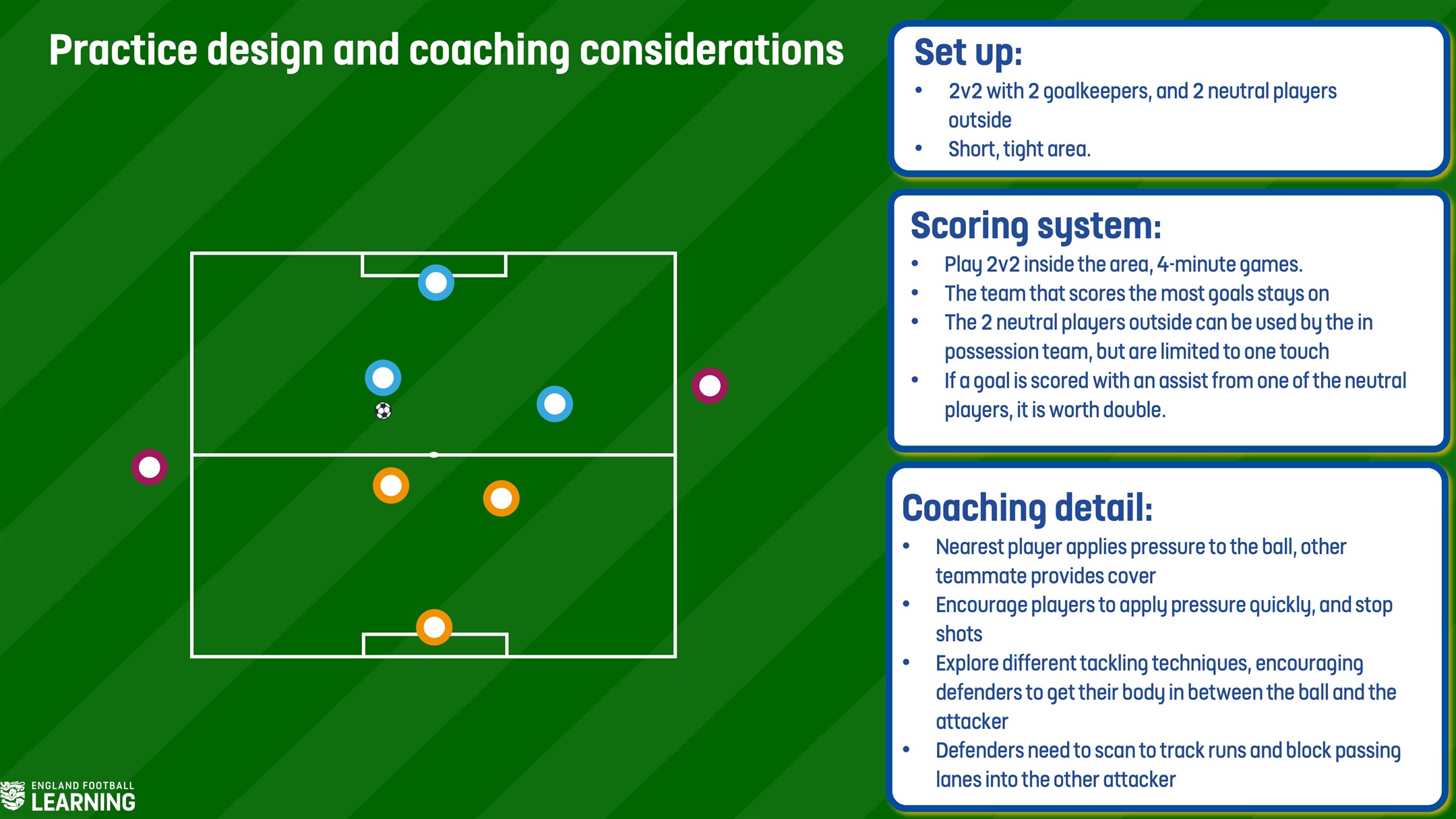
Coaching considerations:
Ensure your training sessions have repetition, realism, and relevance. This will help your players develop their pressing and challenging skills. Encourage your players by coaching:
- What to do in 1v1 situations.
- How to do it.
- When is the right time to do it.
- Where on the pitch is appropriate.
Want more?
Join our coach developers for a live 90-minute webinar on the out of possession core skills at 7.00pm, 19th February 2026
Read another blog: Individual tactics – out of possession Grace Clinton case study
Watch Coachcast – Helping your players master the ten core skills with Emily Senior