



Football isn’t just a game that only demands technical excellence. The physical demands on elite football are higher than ever. We might think of running in football as something for when we don’t have the ball, but what about the running that takes place when our team is in possession? In this blog, Game Insights Analyst James Cook delves into different types of movement while our team is in possession.
Take a look at the graph below. What do you notice?
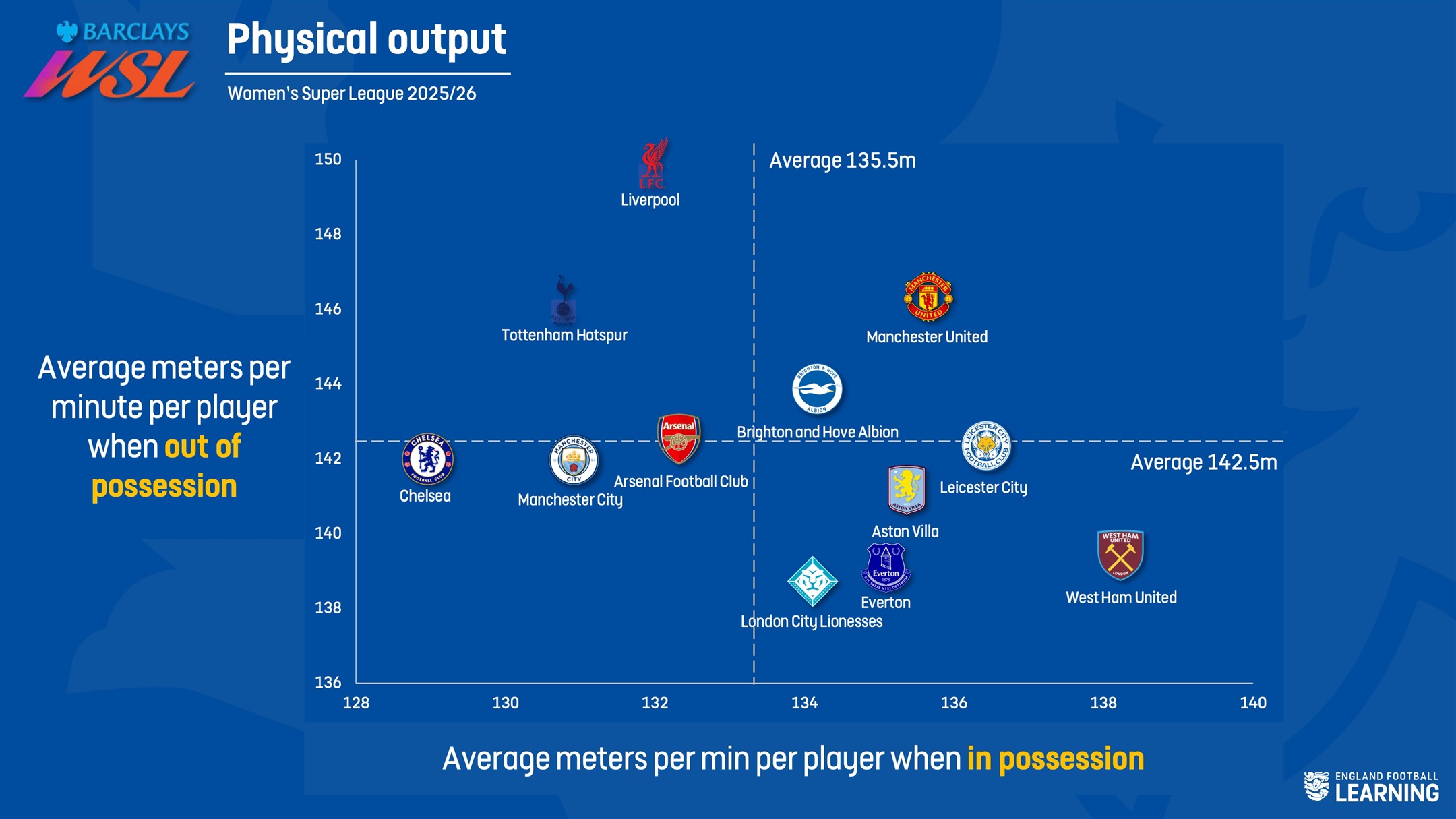
On average, teams cover more distance without the ball than when they are in possession. But the WSL average for distance covered in possession is only slightly lower compared to out of possession. 49% of a player’s distance covered is while their team is in possession. In the average game, this means a WSL player will only cover 600 metres more out of possession than in possession.
So, what might running while your team is in possession look like?
It might be moving with the ball, one of the FA’s in possession core skills. Or, it may be an “off-ball run” while a teammate has the ball.
Watch the video and check out the different types of off-ball runs.
Off-ball runs are connected to core skills, core moves, and the attacking principles of play.
When coaching your players to provide movement, use the before, during, and after framework to help them understand the purpose of their run. Are they trying to create space for themselves to receive the ball? Or are they trying to create space for a teammate to receive the ball?
Before – is the run made from a standing start? Or, are they on the move?
During – can your players read the game and adjust the speed or angle of their run to create space in the right area?
After – can your players receive on the move? Or prepare to make another movement if the ball is not received?
For example, a coming short or support run might be performed to then receive the ball to feet. An underlap or overlap might be performed to receive the ball in space. Or, a run in behind might be to create space for a teammate.
Remember to combine coaching of the physical corner with the technical/tactical corner. Consider the 6 capabilities of receiving skills for your players when coaching.
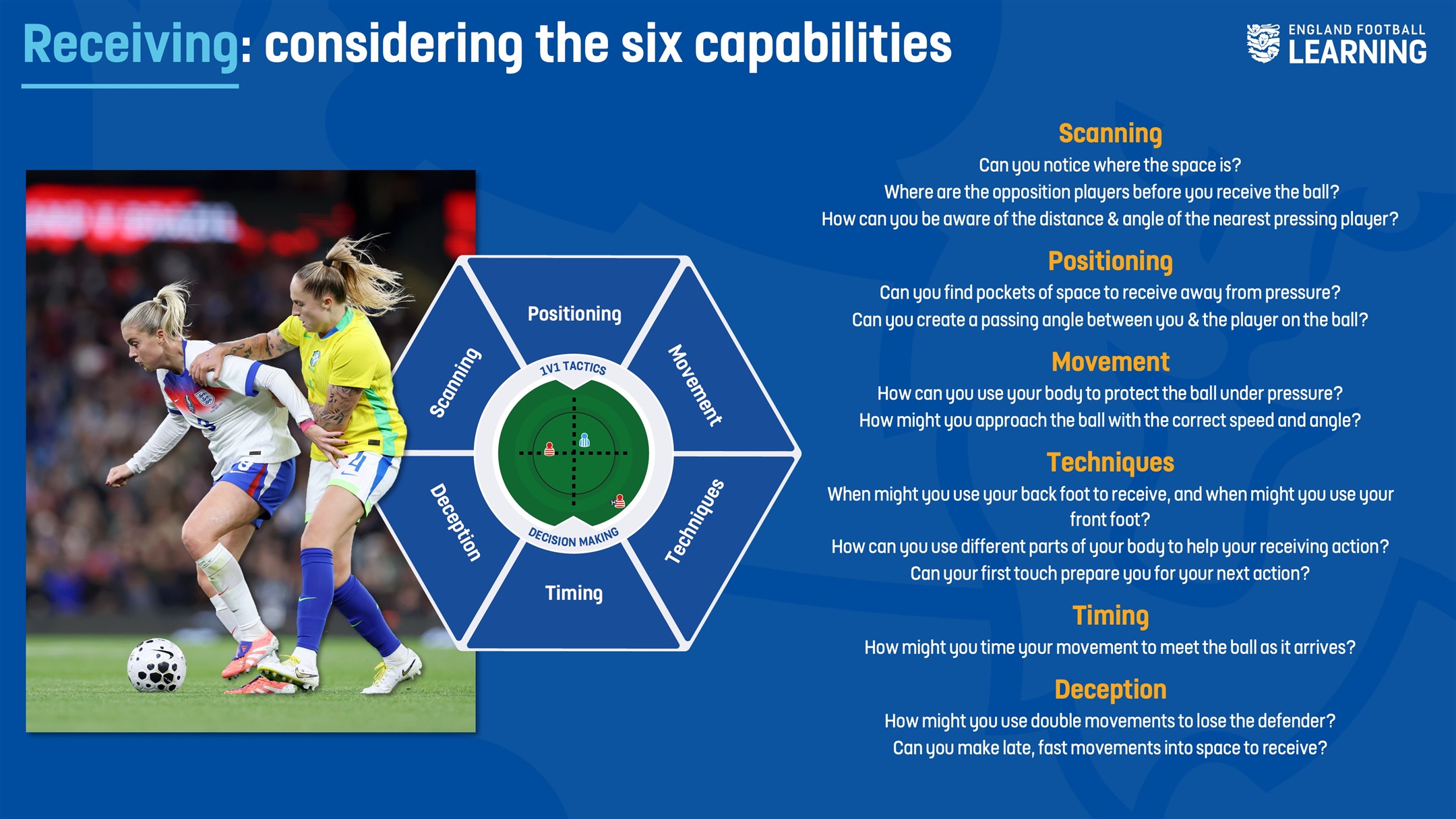
Coaching considerations
- Consider your players' individual capabilities. In your practices, can you match up players of similar physical capabilities to ensure they have a realistic physical challenge to improve?
- The space you provide players within your practices will determine how great the physical demand will be. And the type of physical demand. Bigger areas might mean more distance covered and more high-speed running. Smaller areas might mean players have to change direction and speed more frequently.
- Think about where on the pitch off-ball runs may occur. And the off-ball runs each position performs most frequently. Can you create practices which allow for realism, relevance and repetition?