



Development football is ready to undergo game format changes for matchdays next season. But what about training? How can practice design maximise our players’ development?
Game Insights analyst James Cook explores how game formats can enhance player development.
Game format returns
Game formats are being amended from the 2026-27 season. These changes mean players will continue to play smaller formats for longer. As shown below, the U14 age group is the first to experience 11v11 on matchday.
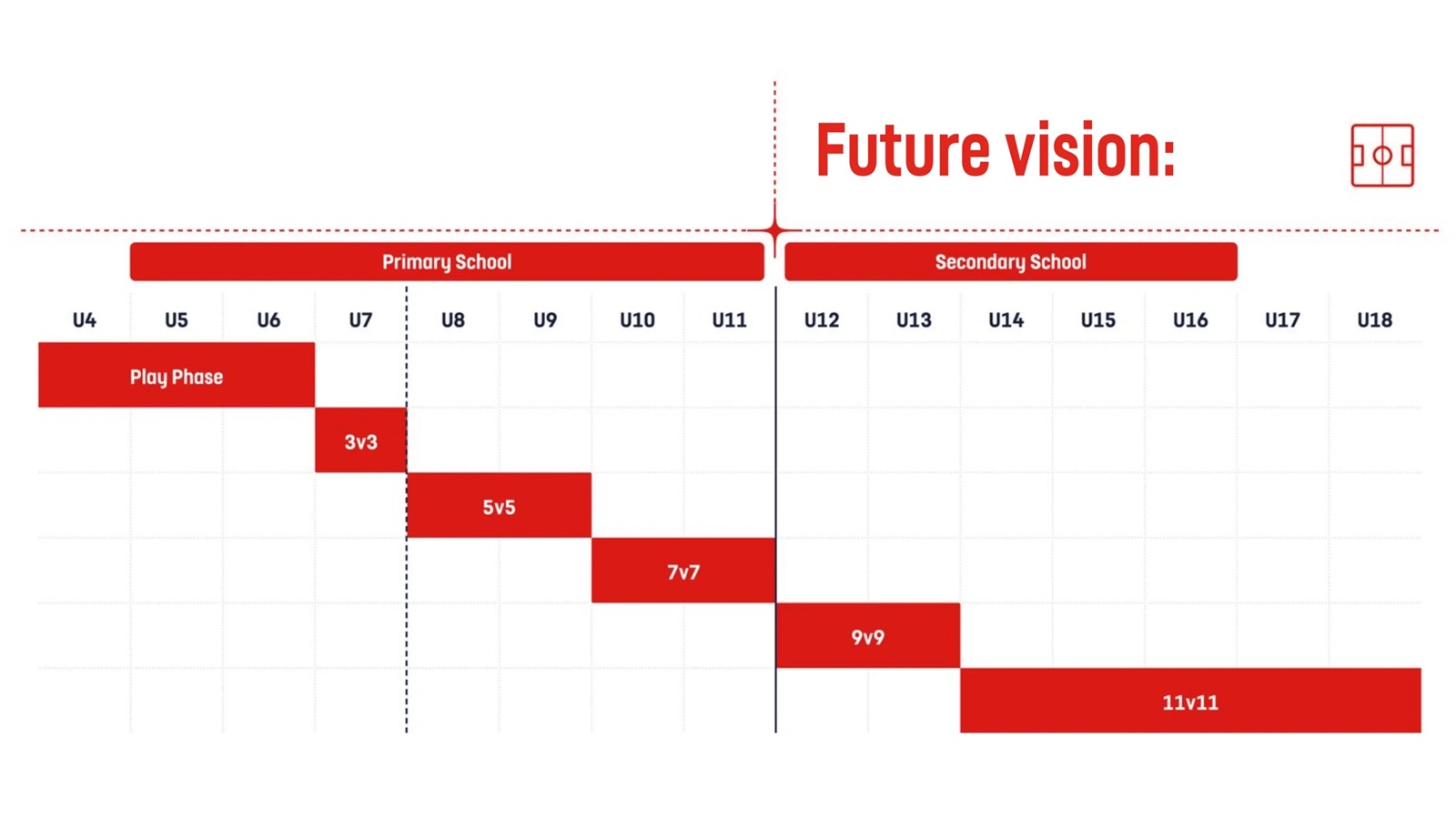
Players get different returns from different game formats. Simply, in smaller formats, players have higher repetitions of core skills.
So, let’s zoom in on a case study to show the returns U14’s got from different game formats.
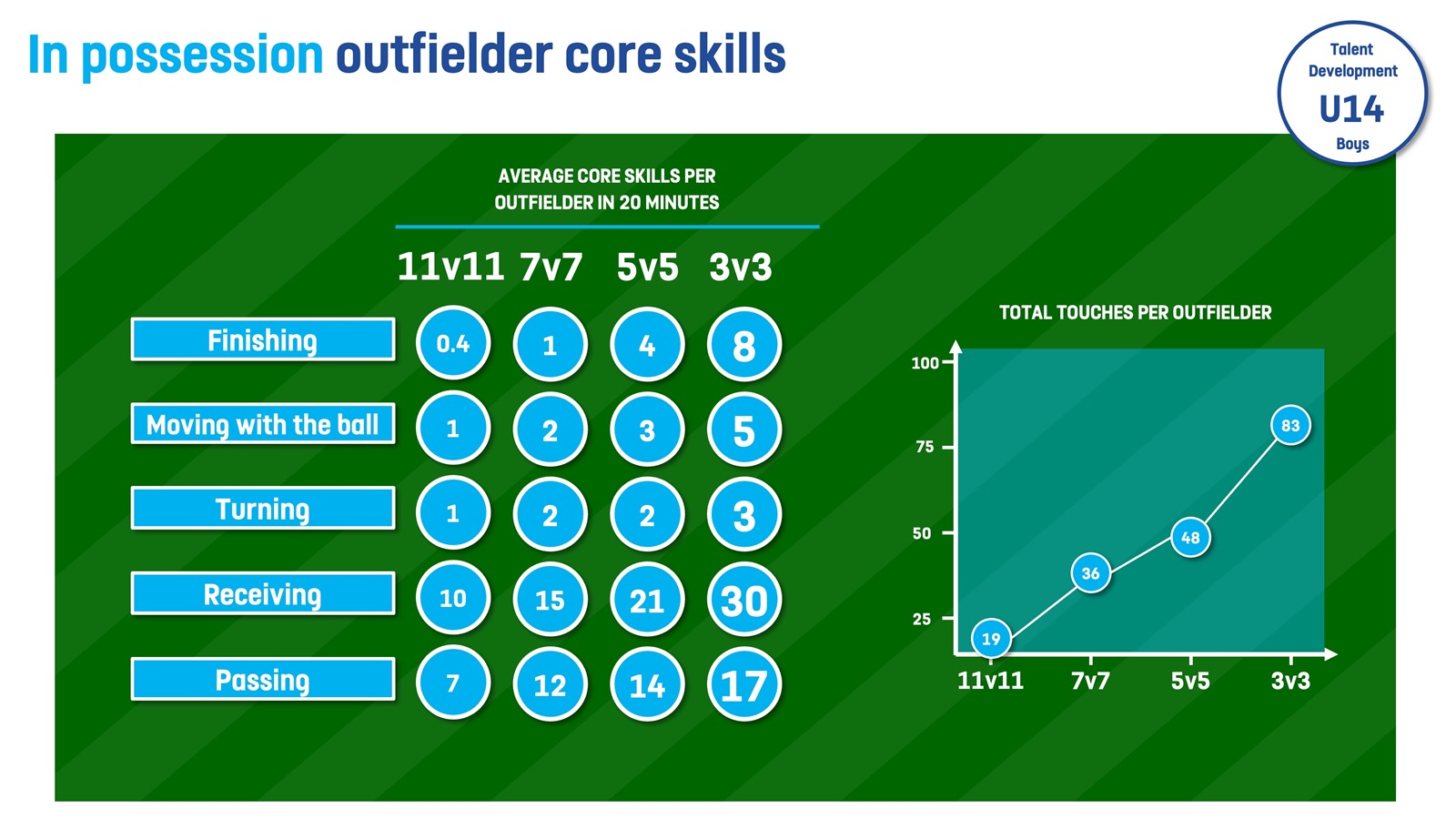
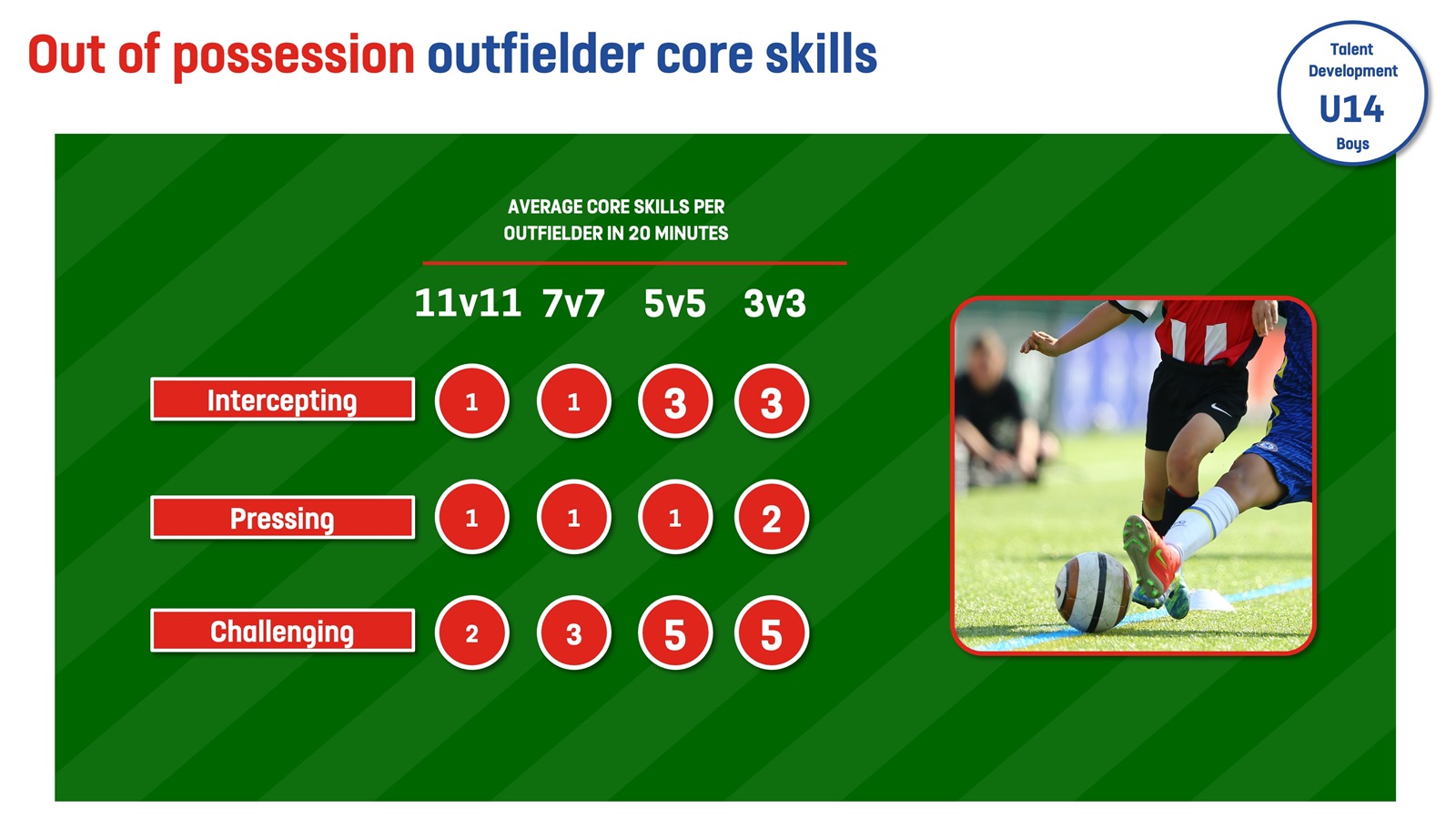
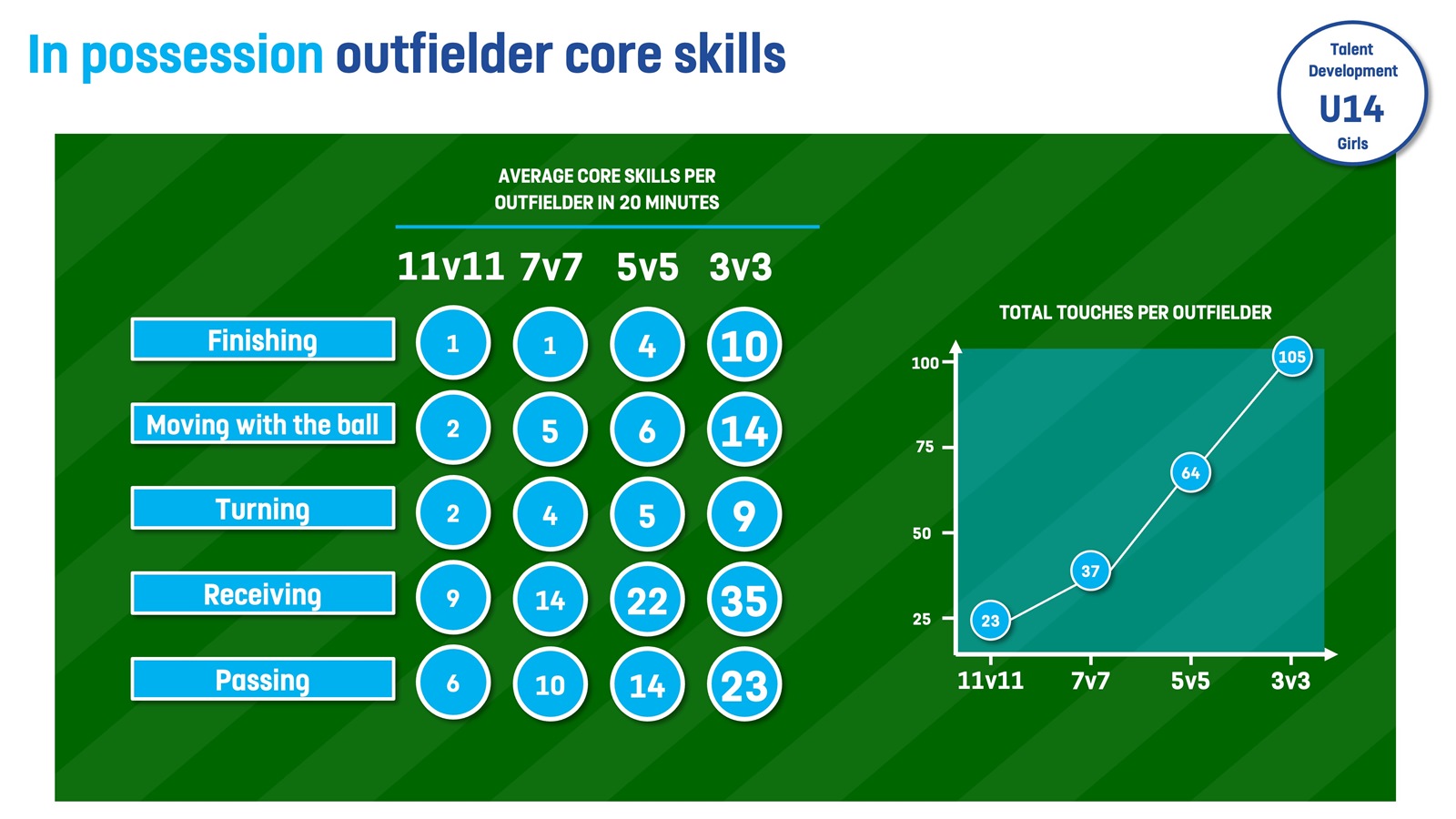
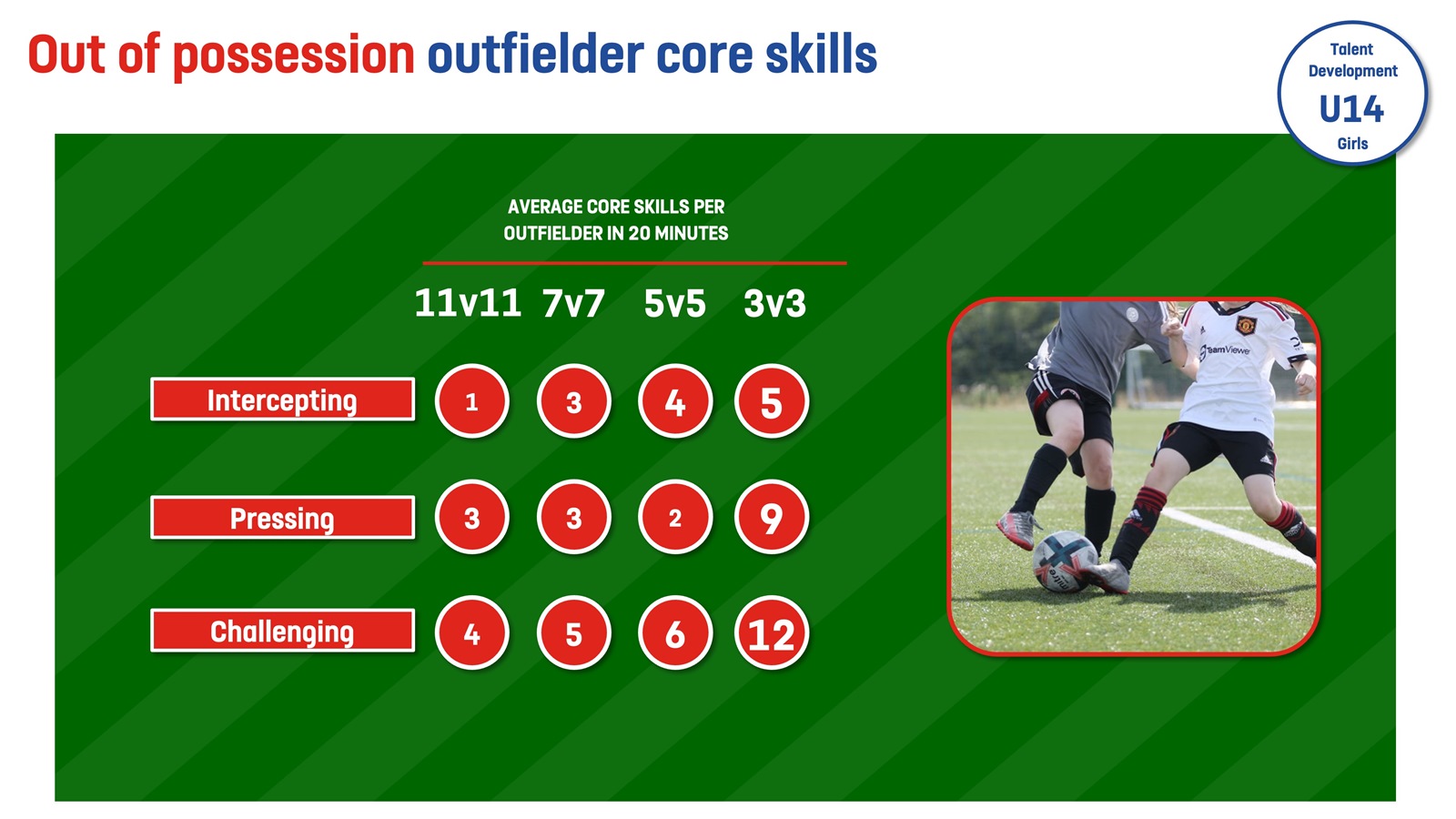
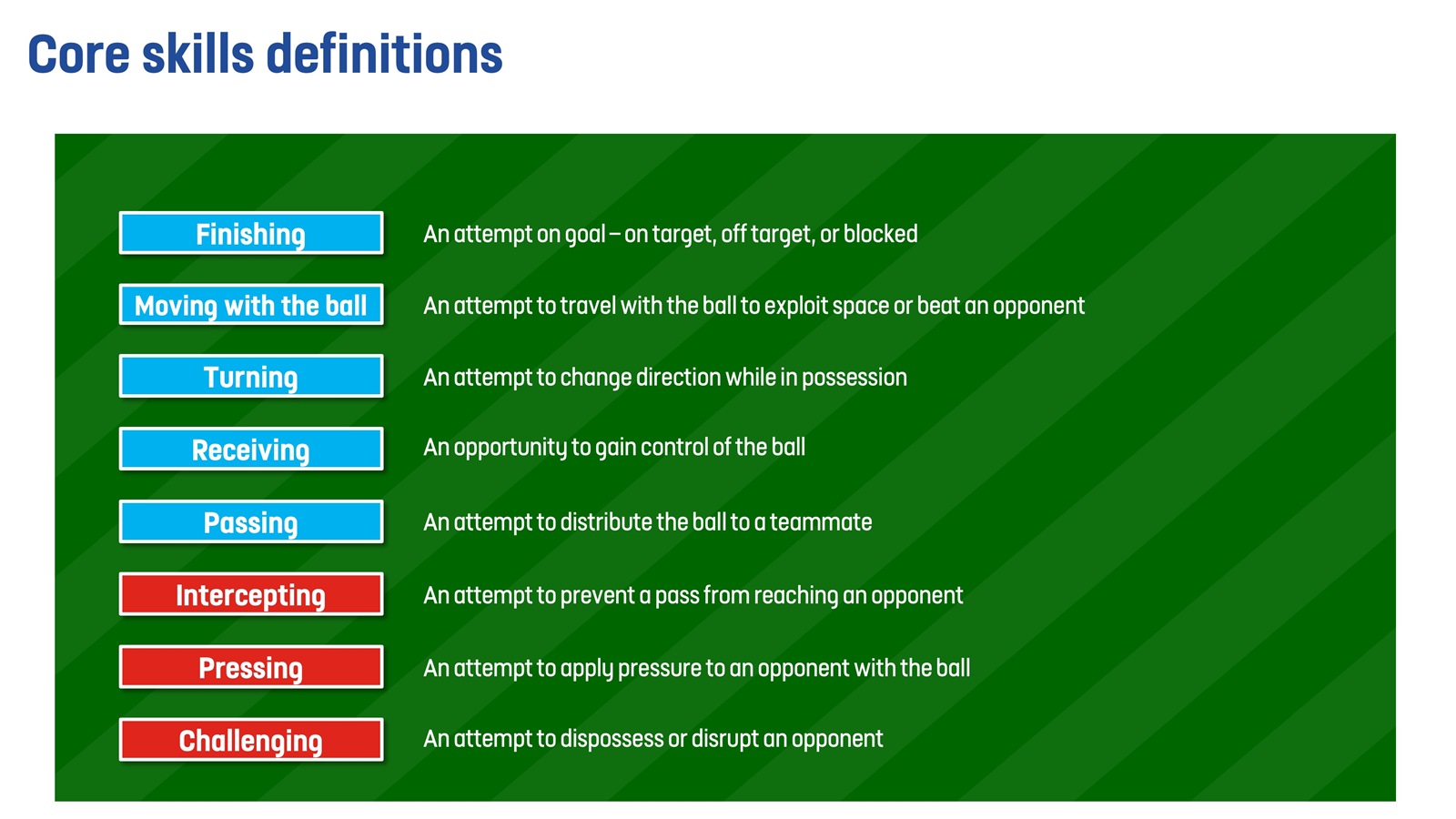
In this U14’s case study, smaller game formats returned more repetition of core skills. This is the case in both the boys’ and girls’ game. Small formats are key for developing technical aspects of the game.
But, bigger game formats are still relevant. Tactical demands are greater in the larger formats. As players get older, they will have fewer technical actions on matchday. But they will get opportunities to develop tactically.
What do the core skills look like in action across different game formats?
Check out this video below on passing. What similarities and differences do you notice in different formats?
While the amount of repetition varies, players still use the core skills no matter the format. But, it may look different.
Here are some considerations for the core skill passing across different game formats:
- Passing distances in 11v11 may be much bigger. Here, players can practice a range of passing techniques to execute longer passes.
- There may be more passing options available to the player on the ball in larger game formats. This challenges the player’s decision-making skills while in possession.
- Bigger formats mean more space. Players may be able to play passes into the space behind defenders.
Technical repetition vs tactical exposure
So, how can we navigate this challenge as coaches?
For players who play 11v11 on matchdays, training sessions become vital. They offer opportunities to recreate smaller game formats through practice design. And, allow players to receive higher repetitions of core skills.
Practices which are 11v11 may make it easier to coach tactical aspects of the game. But we can still make tactical coaching points through practices with fewer players.
Training considerations, when matchdays are 11v11
You can use the STEP framework (Youth Sports Trust, 2002). This helps to maximise player development through effective practice design.
Space
The size of the pitch can change the difficulty level depending on what you're coaching. Smaller spaces gives players the opportunity to practice receiving in tighter areas. Or receiving the ball while under pressure from an opposing player.
Task
The rules or constraints implemented in a practice can change the outcomes. They can also impact the returns. Looking for more repetition of passing? Try setting a target number of team passes before they can score. You can also set different challenges for each player. Try giving them their own targets to personalise their development.
Equipment
The equipment used in your practices can affect the difficulty level. The equipment used should be relevant to the real game. Consider the size of the goals in the finishing practices. And the distances they are shooting from. If the goals are too big and too close, it will be easy for players to finish. Are smaller goals available to use instead? This would increase the difficulty level.
Players
When designing practices, it’s vital to consider the players on your team. Consider their age, stage, and what they need for their development. Every player has different individual tactics to showcase their super strengths. How can you vary training sessions to incorporate smaller game formats? This would maximise your players' potential.
Example practice
Check out this practice design below. See how to use the STEP framework to maximise player development.
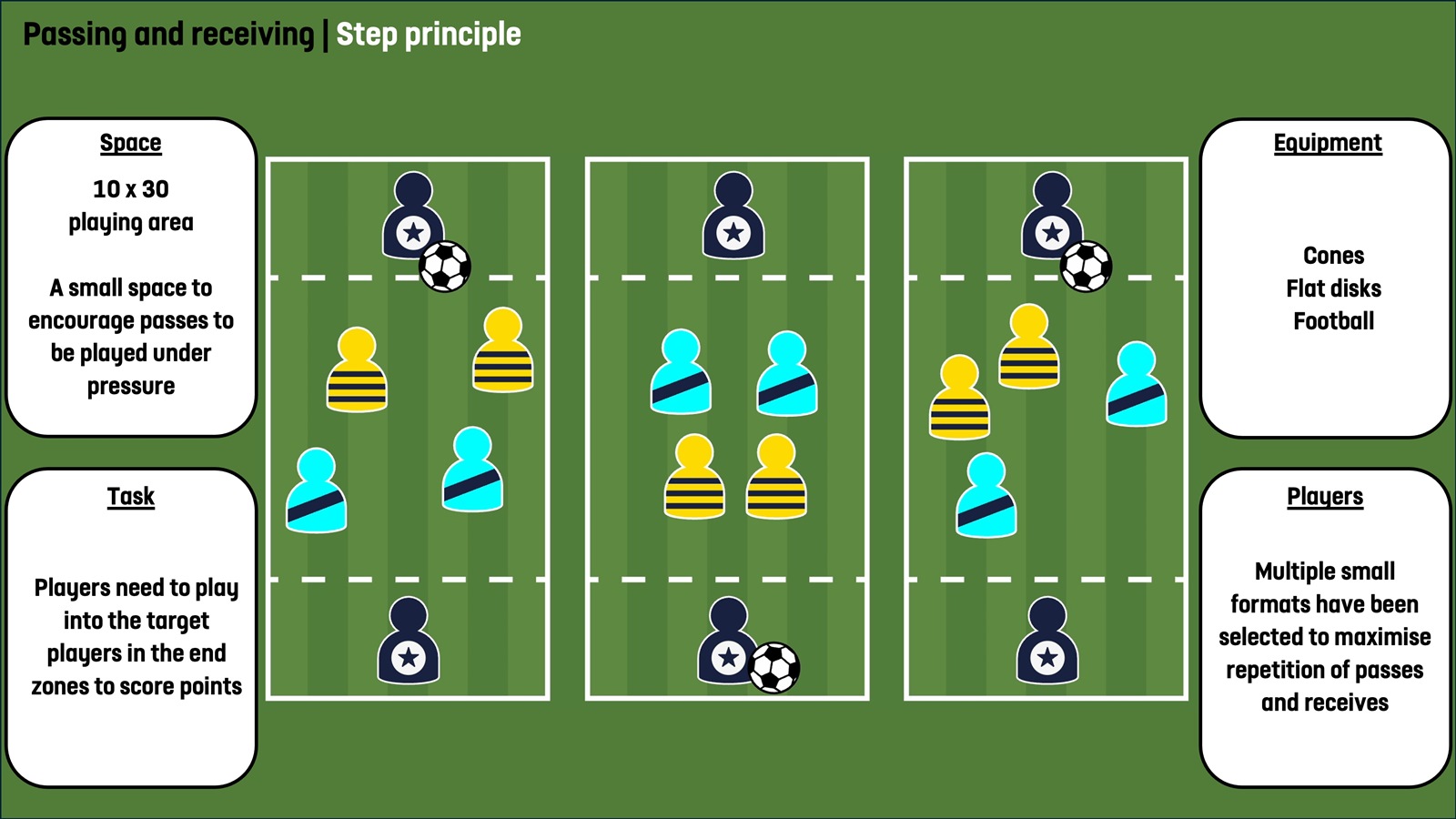
How do you use the STEP framework in your practices to maximise player development? Tell us in the comments below.